
Retention Marketing Case Study: How a Skincare Brand Raised Its Returning Customer Rate to 42% in One Month
A skincare brand in Mexico already had a 33% returning customer rate. So why did it still need retention marketing? The brand was already doing retention, but its efforts were fragmented. Nothing ran as one connected system.
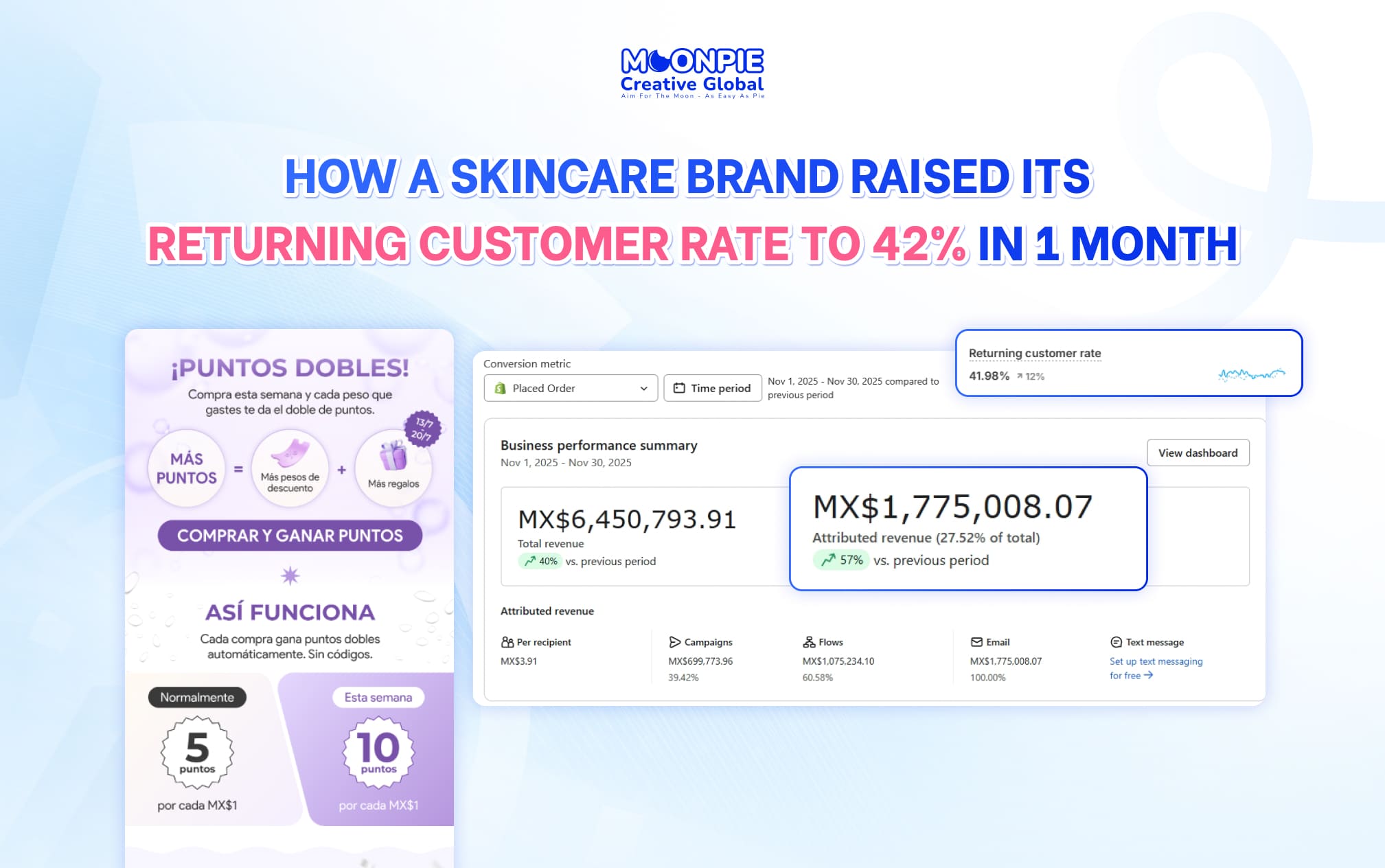
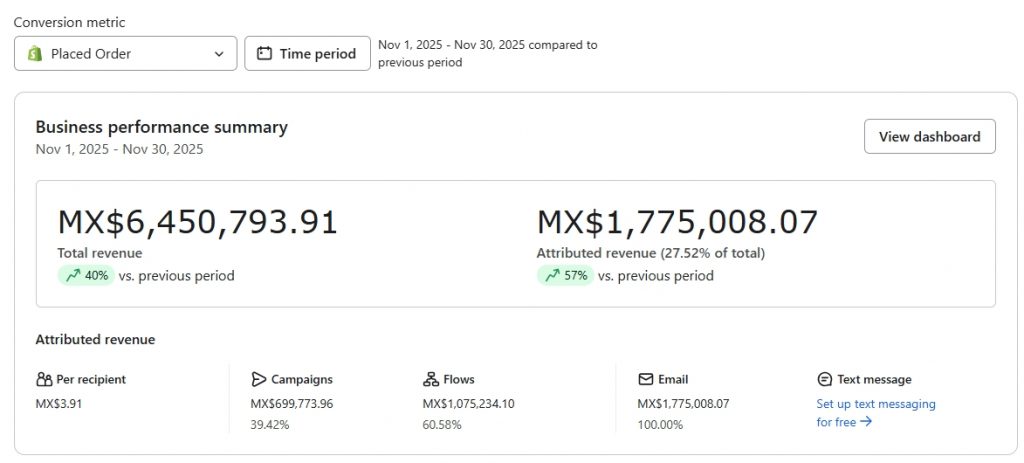
After one month with Moonpie, the returning customer rate rose to 41.98%. Meanwhile, email drove 27.52% of total revenue. This retention marketing case study breaks down the starting point, the strategy and how to read the results.
| Returning customer rate | Email share of revenue | Email revenue vs. previous month |
| 41,98% | 27,52% | +57% |
1. Brand Background
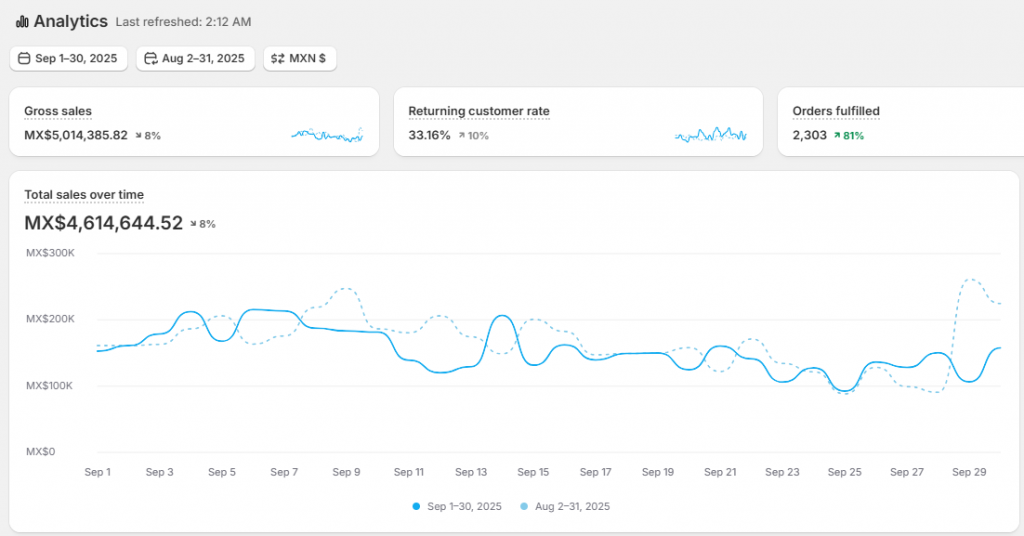
The brand sells skincare products on Shopify in the Mexican market. Before working with Moonpie, it ran email marketing on Omnisend, using both flows and campaigns. Its returning customer rate sat at around 33%. However, no structured system was in place to grow the value of this loyal customer base.
| Detail | Information |
| Industry | Skincare |
| Market | Mexico |
| Ecommerce platform | Shopify |
| Email platform before Moonpie | Omnisend |
| Email platform after Moonpie | Email marketing and loyalty program |
| Target customers | Mainly women who care about skincare and concerns such as pigmentation, dryness, uneven skin tone and signs of aging. They prefer products that fit easily into a daily routine. They also pay close attention to ingredients, technology and proven results. |
2. The Core Problem
A 33% returning customer rate shows the product is good enough to keep customers. However, it does not prove the brand has a retention marketing system. During the account audit, Moonpie found three core problems. Each one limited how much revenue loyal customers could generate.
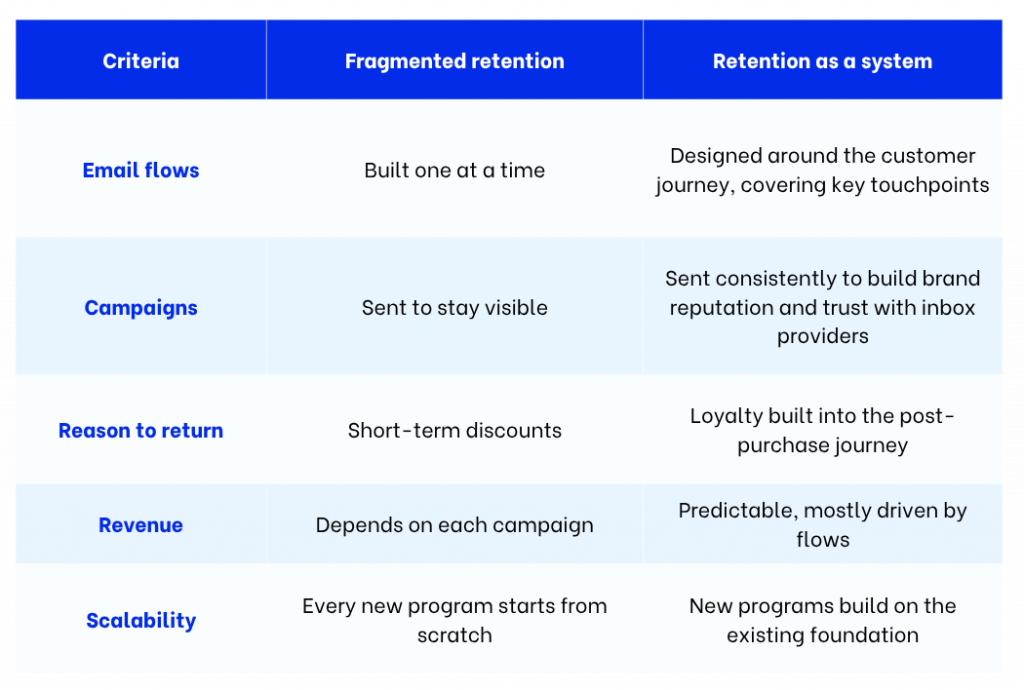
Flows were built in isolation, not around the customer journey
Each flow worked as a separate piece, outside any unified customer journey. Without that endtoend logic, the brand could not control what customers received, when, or why. As a result, key postpurchase touchpoints risked being missed or duplicated.
Campaigns maintained presence instead of nurturing
Campaigns kept the brand visible in the inbox, but they did not build longterm relationships. Each email stood alone. It did not continue the story of the previous send or lead customers to their next purchase.
No reason to return beyond shortterm discounts
When a discount code is the only reason to come back, the brand must keep discounting to protect revenue. Over time, this erodes margin. It also trains customers to buy only when a promotion is running.
Moonpie insight: The brand was doing retention, but it was not running retention as a system. The gap between the two is revenue left on the table.
3. What Is Retention Marketing, and Why Does Your Business Need It?
Retention marketing brings existing customers back to buy again and again. Its foundation has three parts. These are stagebased flows, a steady campaign schedule and a loyalty program. Promotions can lift revenue for a short time. However, lasting repeat purchases need a wellbuilt retention system.
Moonpie started by building these core components instead of running more offers. This foundationfirst approach changes the question a business asks. The question is no longer “What deal should we run this month?” Instead, it becomes “What does each customer stage need to come back?”
The comparison below shows the difference.
4. Strategy: Rebuilding the Retention System
Pillar 1: Rebuilding email marketing around the customer journey
Moonpie rebuilt the email system in three steps:
1. Moonpie mapped the key touchpoints in the customer journey, from signup to first purchase and repeat purchases.
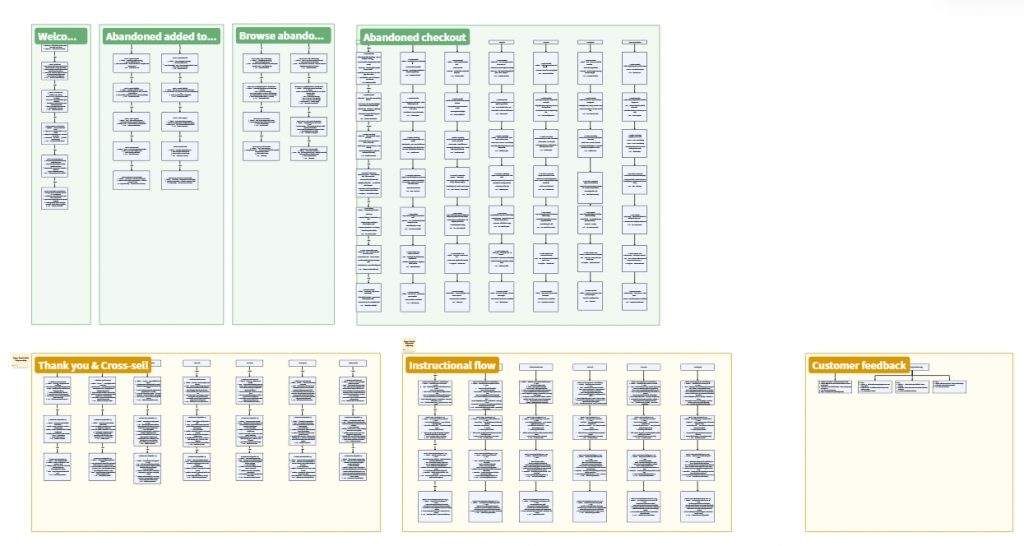
2. Next, Moonpie built core email flows so the brand shows up consistently at every touchpoint. The flow map includes Welcome, Abandoned Add to Cart, Browse Abandonment and Abandoned Checkout flows. It also covers Thank You and Crosssell, Instructional and Customer Feedback flows.
3. Finally, Moonpie planned a consistent campaign calendar. The goal was to build brand reputation and trust with inbox providers, not to create shortterm revenue spikes.
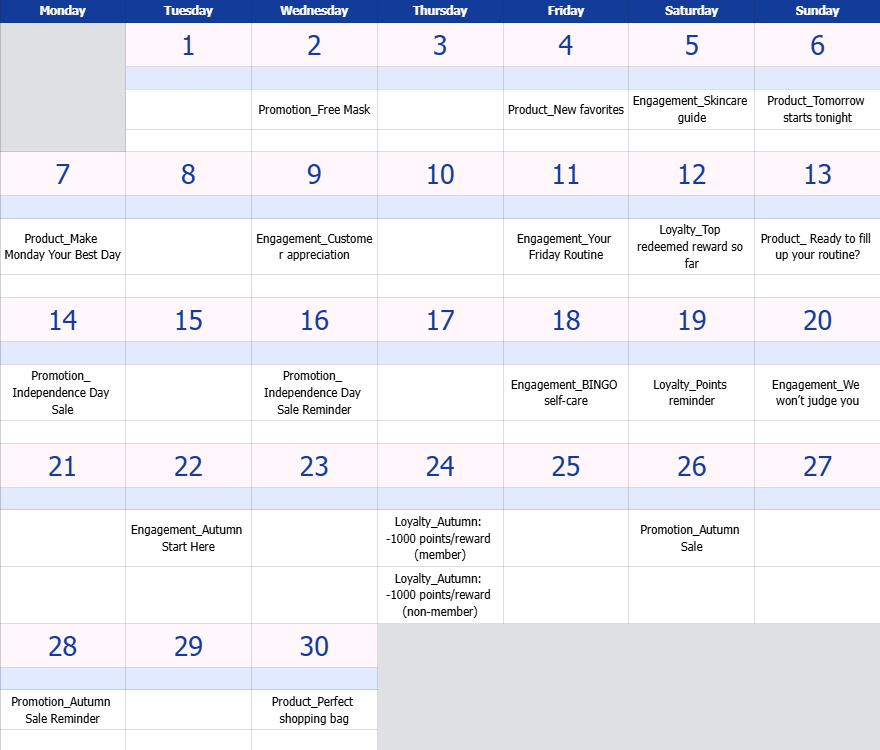
A steady sending schedule helps inbox providers see consistent engagement signals from the brand’s domain. As a result, emails are more likely to reach the inbox when peak season arrives.
Pillar 2: Using loyalty as a natural driver of behavior
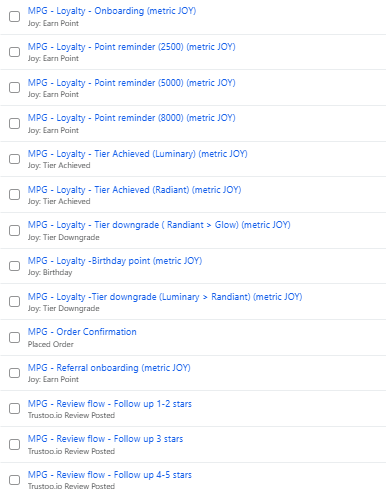
Moonpie built a loyalty program to give customers a clear reason for their next purchase. The program runs on Joy Loyalty. Customers earn points and move through three tiers: Glow, Radiant and Luminary.
What sets it apart is where loyalty sits in the system. Loyalty is not a standalone website feature. Instead, it is built into the postpurchase journey and the overall customer experience. Loyalty only drives behavior when customers hear about points or perks at the right moment.
5. Results After Implementation
The returning customer rate rose from 33.16% to 41.98%. Email revenue grew 57% month over month and reached 27.52% of total revenue. Flows generated about 60% of that email revenue. In other words, most email revenue now comes from automation rather than oneoff sends.
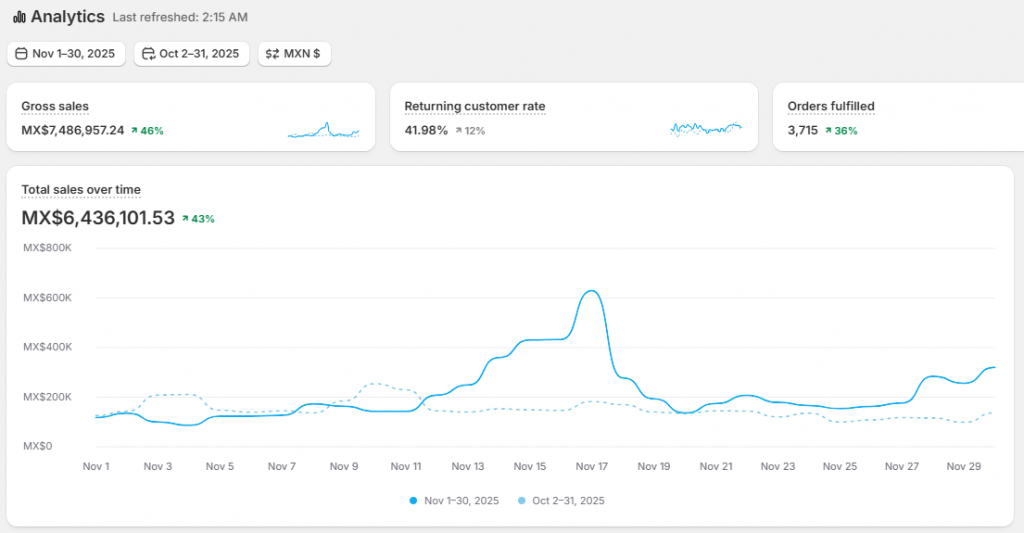
November 2025 coincided with El Buen Fin, one of Mexico’s biggest shopping events (November 1317), meaning overall revenue was influenced by seasonal demand. The two metrics that most clearly reflect retention performance are the returning customer rate and the share of revenue generated by automated flows, as both are less dependent on promotional discounts.
Three key factors suggest that the results were not driven solely by the sale season:
1. No additional emailexclusive deals were introduced in November. Therefore, the 57% increase in email revenue was not driven by deeper discounts.
2. Automated flows contributed 60.58% of total email revenue. Since flows are triggered by customer behavior, this revenue contribution reflects the effectiveness of the retention system rather than just the seasonal shopping surge.
3. Sale seasons typically attract more firsttime buyers. The fact that the returning customer rate still increased to 41.98% suggests that existing customers were effectively reengaged.
6. Why Does Systems Thinking Help Retention Scale?
The onemonth results show more than better retention metrics. More importantly, the brand now has a clear system it can keep building on. Once flows, campaigns and customer data run as one system, each new retention program plugs into what already exists. It no longer has to start from scratch.
With this foundation in place, the business can add:
- Loyalty: expand the program with more tiers and exclusive perks.
- Subscription: encourage recurring orders for products customers use every day.
- VIP: create extra benefits for highvalue customers.
- Referral: encourage existing customers to refer new ones.
The key point is that these programs do not need to run as separate projects. Instead, they connect to the existing email system and customer journey. As a result, each new program creates more touchpoints for customers to return, engage and buy over the long term.
7. Does Your Business Need to Rebuild Its Retention Foundation?
A business should rebuild its retention foundation in one common situation. It already has repeat buyers, but email revenue still depends on discount campaigns. On the other hand, if customers do not reorder naturally, the brand should fix the product and shopping experience first. Only then is it worth optimizing retention.
Use the self-check table below for a quick assessment of your current system.
| Sign | Yes / No | What it means |
| Flows are built separately, with no overall customer journey map |
☐
|
Customers slip through post-purchase touchpoints |
| Campaign revenue is higher than flow revenue |
☐
|
Email revenue depends on manual sends |
| A discount code is the only reason to come back |
☐
|
Margin erodes over time |
| A loyalty program exists but rarely appears in post-purchase emails |
☐
|
Loyalty is not yet driving behavior |
| Every new program, such as VIP or subscription, is built from scratch |
☐
|
The system cannot scale yet |
If you tick “Yes” for three or more signs, your retention foundation is likely your biggest growth bottleneck.
8. Frequently Asked Questions
How is retention marketing different from regular email marketing?
Email marketing is a channel. Retention marketing, by contrast, is a strategy for keeping customers across several channels, with email usually leading. It combines email flows, campaigns, loyalty and behavioral data to drive repeat purchases. The end goal is higher customer lifetime value (CLV), not better results from any single email.
How is the returning customer rate calculated in Shopify?
In Shopify Analytics, the returning customer rate is the share of customers who ordered more than once. It is measured against all customers who ordered in the period. It shows how loyal your customer base is. Therefore, track it monthly and compare periods with similar seasonality.
How long does a retention foundation take to show results?
In this case study, the brand saw clear results one month after the system went live. However, timing depends on list size, repurchase cycle and starting deliverability. In skincare, repurchase cycles are short. As a result, positive signals usually appear sooner than in high-ticket categories.
Do you need deep discounts to raise the returning customer rate?
Not necessarily. In this case study, email ran no extra deals in November. Even so, the returning customer rate rose from 33.16% to 41.98%. Customers came back because of journey-based flows and a loyalty program built into the post-purchase experience. As a result, the brand protected its margin.
How is email attributed revenue calculated?
Attributed revenue is revenue from orders credited to an email. It counts when a customer opens or clicks that email within the attribution window. According to Klaviyo’s guide, new accounts use a five-day window for opens and clicks. Klaviyo credits revenue on a last-touch basis.
Do you already have repeat buyers, but email revenue still depends on discounts? Moonpie helps direct-to-consumer (DTC) brands audit their current retention system. We rebuild the retention foundation around the customer journey and connect it with loyalty. The result is repeat, predictable revenue.
Contact Moonpie to see how retention marketing can unlock sustainable growth for your business.
Read more Moonpie case studies:
1. How an Email Marketing System Helped a Men’s Health Brand Increase Revenue 10X in 3 Months
2. 156% Email Revenue Growth Through Lifecycle Marketing | Home & Living Case Study