
How a Men’s Health Brand Grew Email Marketing Revenue 10X in 3 Months With Lifecycle Marketing
How can a fast-growing Shopify brand earn six figures every month while email drives only 3% of its revenue? For one men’s health brand, the answer was not a bigger ad budget. The fix was a full rebuild of its lifecycle marketing system. In this case study, Moonpie shares how we rebuilt the brand’s Email and SMS program on Omnisend in just three months.
Key results at a glance
| $410,254 USD
Email revenue in one month |
27.6%
Email revenue share of total store |
10X
Growth vs. before engagement |
1. Brand Background
The client is a Shopify brand focused on men’s sexual health and wellness. It sells two core product lines, a pelvic floor training device for men and a daily supplement. Its customers are men aged 30 to 55 in the US who are married or in a relationship, and they dislike pushy, insensitive marketing.
- Industry: Men’s health and wellness
- Ecommerce platform: Shopify
- Core products: A pelvic floor training device for men and a supplement that supports male sexual health
- Target customers: Men aged 30 to 55 in the US who care about sexual health, performance, prostate health, and confidence in their relationships
This audience is valuable but hard to reach. These customers rarely respond to loud promotions or awkward messaging about intimate topics. Therefore, tone of voice matters as much as offer strategy.
2. The Challenge: A Profitable Store With an Idle Email Engine
Before working with Moonpie, the brand earned about $100,000 a month, yet email contributed only around 3% of store revenue. The audit uncovered six underperforming flows, generic messaging for a sensitive audience, and weak deliverability. In short, the brand already owned an email engine, but nobody had started it properly.
Key metrics before working with Moonpie:
- Average monthly revenue: ~$100,000
- AOV (Average Order Value): $104
- Repeat customer rate: ~2%
- Active email list: 15,000 subscribers
- Email revenue (last 30 days): $3,674, about 3% of store revenue
2.1. Six flows were not built to convert
| Flow | What Moonpie found | Impact |
| Welcome (4 emails) | Open rate was high at about 60%, but strict double opt-in limited the audience. The series also stretched over 11 days. | New subscribers lost interest before the series ended. |
| Abandoned Checkout (4 emails) | A misconfigured filter skipped about 90% of eligible recipients. | One of the highest-revenue flows was almost inactive. |
| Browse Abandonment | It contained a single email that still used Klaviyo’s default content. | The flow had no persuasive power. |
| Customer Thank You | First-time and returning buyers received identical content. | Repeat buyers felt unrecognized, which hurt loyalty. |
| Post-Purchase (4 emails) | The first email waited 15 days, and the content felt plain and off-brand. | The brand missed the best window for cross-sell. |
| Winback (3 emails) | The first email went out 75 days after the last purchase. | Lapsed customers had already moved on. |
2.2. The messaging did not fit the audience
The tone of voice was generic. It lacked the warmth and relevance that middle-aged men need when reading about sexual health. As a result, emails felt either too salesy or too distant.
2.3. Deliverability was holding emails back
Unsubscribe and spam complaint rates needed improvement. Consequently, fewer emails reached the inbox, even when the content was strong.
Key insight: The brand had a capable email machine that had never been switched on correctly. Its biggest growth opportunity was sitting untouched inside its own customer list.
3. Goals and KPIs
Moonpie set five goals based on the account’s current state and industry benchmarks. The headline goal was to lift email’s share of store revenue from about 3% to more than 15%. The other goals covered sign-up conversion, flow quality, campaign consistency, and deliverability, so growth would stay sustainable.
1. Grow email’s share of revenue from about 3% to more than 15% of store revenue.
2. Improve sign-up form performance by raising the submit rate from 2% to at least 4%.
3. Upgrade flow quality by rebuilding all 6 flows and adding new ones.
4. Send campaigns consistently, with at least 1 to 2 campaigns per week.
5. Improve deliverability by lowering spam complaint and unsubscribe rates.
4. The Strategy
Moonpie rebuilt the lifecycle system in five steps instead of patching individual flows. The team moved the brand to Omnisend, redesigned the sign-up popup, rebuilt every Email and SMS flow, launched a steady campaign calendar, and stabilized deliverability. Each step solved one bottleneck found in the audit.
Step 1: Choose the right platform
Moonpie recommended Omnisend for this brand. The client’s Omnisend plan included free SMS credits matched to the email plan. Therefore, the brand could launch SMS marketing immediately without extra cost.
Step 2: Redesign the sign-up form and popup
- Moonpie redesigned a two-step popup with imagery and copy that fit the brand.
- The team refined the incentive to grow both email and SMS sign-ups.
- The target was a submit rate of at least 4%.
 before |
 after |
Popup before and after redesign
Step 3: Rebuild every Email and SMS flow
Moonpie did not patch the old setup. Instead, the team built a new flow system around the full customer lifecycle.
Pre-Purchase Flows:
- Welcome (Email + SMS): Moonpie shortened the delays and personalized each stage, from brand story to product education. The series builds trust with a health-conscious audience.
- Abandoned Checkout (Email + SMS): The team fixed the broken filter, optimized send timing, and added reminders with the right level of urgency.
- Abandoned Add to Cart (Email): This new flow targets shoppers who added items but did not check out. It uses personalized content and clear CTAs to complete the order.
- Browse Abandonment (Email): One email became a multi-step series with storytelling, customer reviews, and product certifications.

Post-Purchase Flows:
- Thank You: First-time and returning buyers now receive separate content. The flow also upsells the daily supplement and explains how the products work.
- Post-Purchase: Moonpie shortened the delays and added a cross-sell sequence focused on health outcomes.
- Winback: The flow now starts earlier than 75 days, with a warmer tone tied to real customer pain points.
Step 4: Launch a consistent campaign calendar
- Campaigns combined education about sexual health and product benefits with timely promotions.
- Moonpie standardized the tone of voice to be friendly, confident, and non-judgmental. This tone fits how men aged 30 to 55 prefer to discuss sensitive topics.
- Sending frequency grew from one email per week to two or three per week once deliverability stabilized.

Step 5: Strengthen deliverability
- Moonpie warmed up the sending domain with a standard warm-up process
- Better content relevance and frequency control helped reduce unsubscribes.
- The team sent only to engaged subscribers.
- The team reviewed spam complaint rates every week to keep the list clean.
5. Results
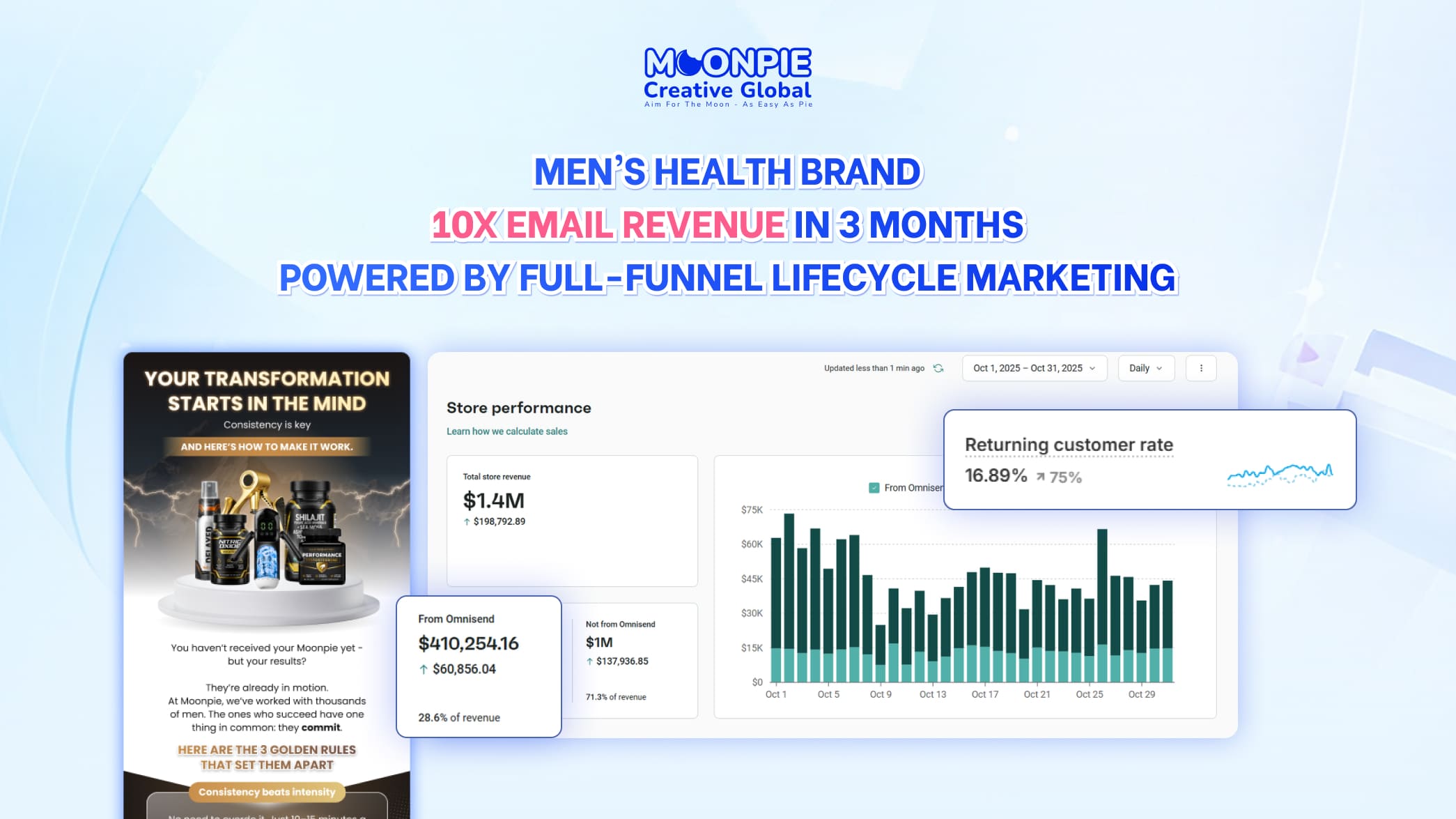
After three months, email revenue on Omnisend reached $410,254 in October 2025, equal to 27.6% of store revenue. That result nearly doubled the original 15% target. The repeat customer rate also rose from about 2% to 16.89%, which shows the new flows drove loyalty as well as first orders.
| Metric | July 2025 (before Omnisend optimization) | October 2025 (after 3 months with Moonpie) |
| Total store revenue | $457,309 | $1,400,000 (up $198,792 from September) |
| Omnisend revenue | $0 | $410,254 (up $60,856 from September) |
| Email share of store revenue | ~3% | 27.6% (target was more than 15%) |
| Repeat customer rate | ~2% | 16.89% |

6. Does Your Brand Need a Lifecycle Marketing Overhaul?
Your brand likely needs an overhaul if email drives far less than the 15% target set in this case, your flows still use default templates, or customers rarely buy twice. These signals usually point to a system problem rather than a traffic problem. Use the checklist below to find your biggest gap first.
| Warning sign | What it usually means | Where to start |
| Email drives a small share of revenue | Flows and campaigns are not working as a system | Run a full lifecycle audit |
| Abandoned Checkout revenue is unusually low | Filters or triggers may be misconfigured | Check flow filters and trigger logic |
| Flows still use default platform content | Messaging does not reflect your brand or customers | Rewrite content around real pain points |
| First-time and repeat buyers get the same emails | Customers feel unrecognized | Split Thank You and Post-Purchase by purchase history |
| Repeat customer rate stays in low single digits | Post-purchase journeys start too late or say too little | Shorten delays and add cross-sell sequences |
| Spam complaints or unsubscribes keep rising | Frequency or targeting is off | Send to engaged segments and review weekly |
7. FAQ
7.1 What share of revenue should email drive for a DTC brand?
For this brand, Moonpie set a target of more than 15% of store revenue, and the brand reached 27.6% within three months. The right target depends on your list size, flow setup, and campaign frequency. However, a share well below this level usually signals untapped retention revenue.
7.2 How long does it take to see results from a lifecycle marketing overhaul?
In this case study, the brand saw major results within three months. Flows such as Abandoned Checkout and Welcome often deliver gains first, because they capture shoppers with high purchase intent. Meanwhile, campaigns and retention flows build value over the following months.
7.3 Why did Moonpie recommend Omnisend for this brand?
Moonpie chose Omnisend because the client’s plan included free SMS credits matched to the email plan. This allowed the brand to launch SMS alongside email without extra cost. Therefore, flows such as Welcome and Abandoned Checkout could run on both channels from the start.
7.4 How should brands write emails for sensitive health topics?
Brands should use a friendly, confident, and non-judgmental tone. Education should come before promotion, so customers understand the product and feel respected. Real reviews and product certifications also build trust, which matters more in health categories than aggressive discounts.
Is your email program generating the revenue your customer list deserves? Moonpie helps DTC brands build lifecycle marketing systems that turn existing customers into sustainable growth.
=> Book a free lifecycle audit with Moonpie
Read more case studies:
How Moonpie Grew Email Revenue to 31% for a Supplement Brand
Lifecycle Marketing: 156% Email Revenue Growth for Home Decor