156% Revenue Growth Through a Comprehensive Lifecycle Marketing Strategy | Home Decor Industry Case Study
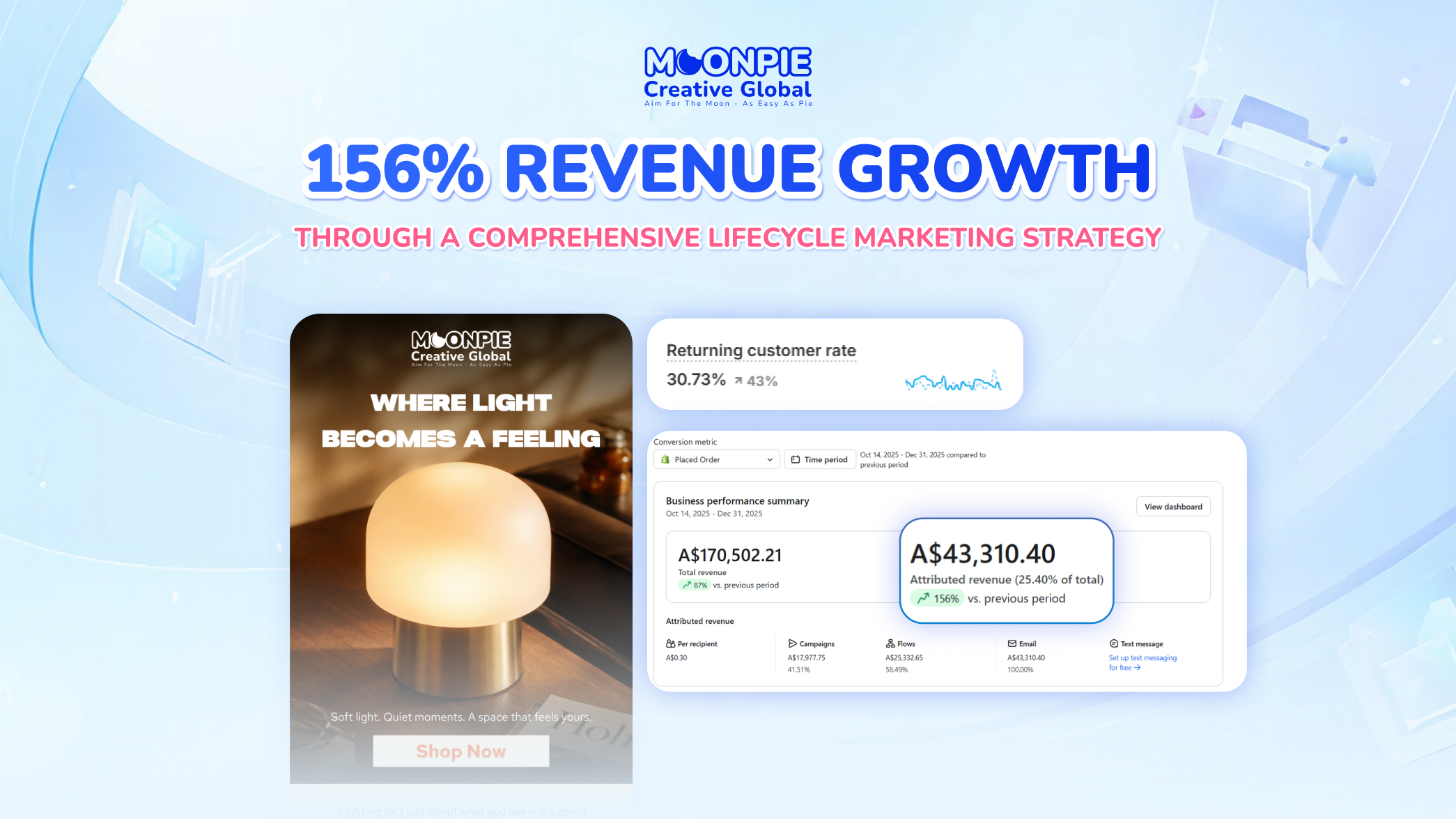
After just 3 months of implementing a lifecycle marketing system on Klaviyo, Moonpie helped a Home & Living business achieve significant results:
- Email revenue increased by 156%
- Email contributed 25.4% of total revenue
- Repeat purchase rate improved significantly, reaching 30%
- Flow automation contributed 58.49% of email revenue, creating a sustainable growth foundation
These results did not come from short-term campaigns, but from building a complete lifecycle marketing system
1. Brand Context
- Industry: Home & Living
- Platform: Shopify
- Lifecycle marketing platform: Klaviyo (Email & SMS)
- Product category: Premium decorative lighting and home decor
- Target customers: The brand focuses on women aged 40+ in Australia and Canada. This customer group has stable income, a well-defined aesthetic taste, and a strong interest in creating living spaces that reflect their personal style and emotions.
For them, buying a lamp is not simply purchasing a lighting product. It is a decision related to:
- Creating a warm atmosphere in the home
- Enhancing daily living experience
- Expressing personal taste
As a result, their buying behavior typically includes:
- Longer consideration time
- Lower sensitivity to price
- Higher likelihood of returning if the initial experience is good
- High risk of losing connection with the brand if not continuously nurtured
This creates a clear requirement for marketing strategy: The brand cannot simply “sell products”, but must act as a source of inspiration and a trusted advisor in the customer’s journey of improving their living space.
This is also why a nurturing email marketing system becomes a key factor not only for increasing conversion, but also for maintaining long-term customer relationships.
2. The Problem
Before working with Moonpie, the business had been using Klaviyo for a long time, but performance was not aligned with its potential.
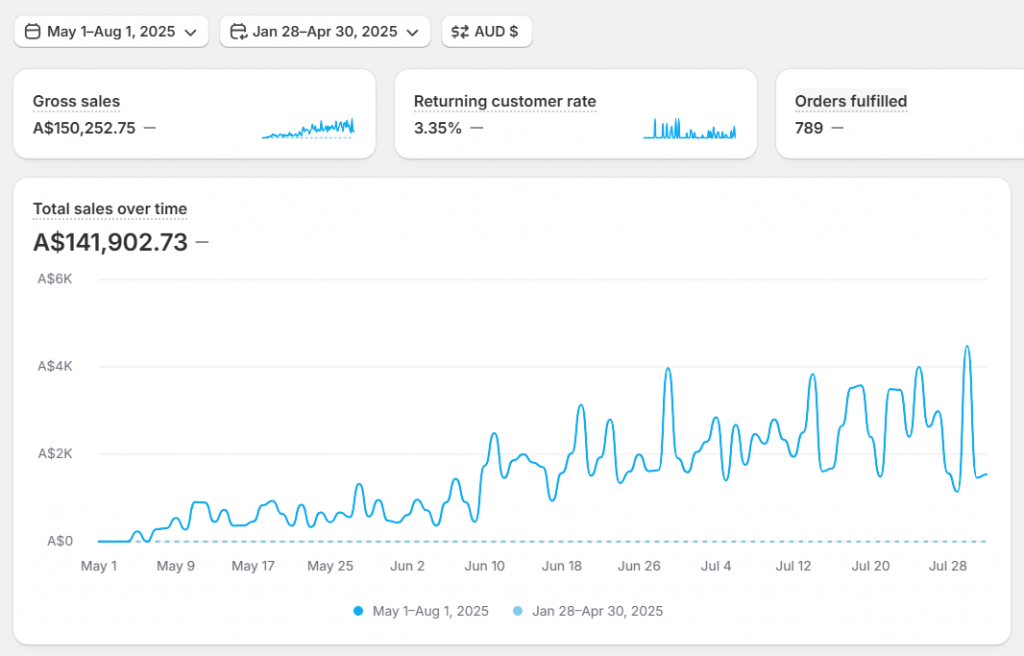
Performance metrics:
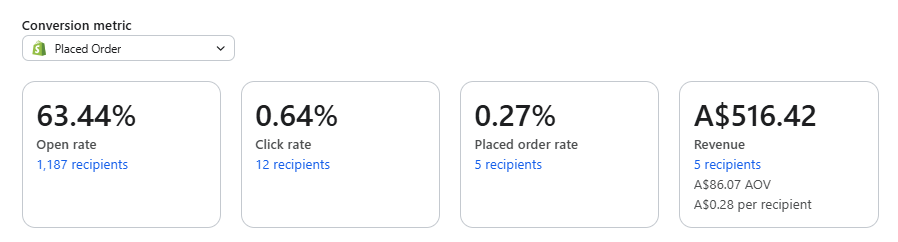
- 90-day repeat purchase rate: 3.35%
- Email contributed 6.41% of total revenue
- Campaign contribution remained limited within the last 90 days
System issues:
-
Email flows were fragmented and not aligned with the customer journey
-
Email content was mainly promotion-based, lacking storytelling
-
No behavioral personalization
-
Post-purchase stage was almost entirely missing
Customer behavior challenge:
-
Not return
-
Forget the brand
-
Not develop additional purchase needs
3. The Objective
-
Increasing repeat purchase rate to 10%
-
Increasing email revenue contribution to 15-20%
-
Improving the performance of flows and campaigns
4. Strategy & Framework
4.1. Rebuilding the Lifecycle System
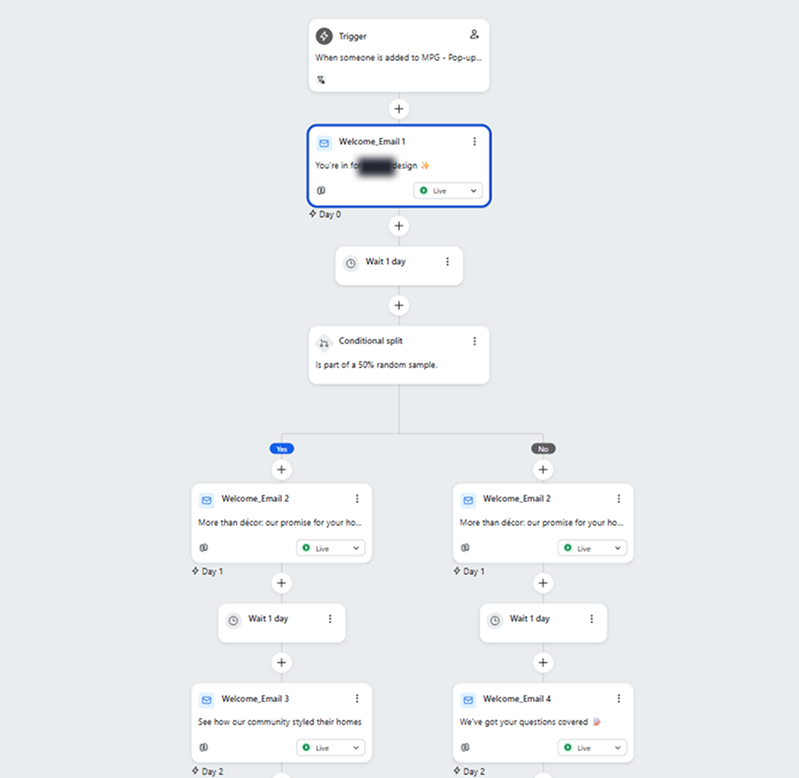
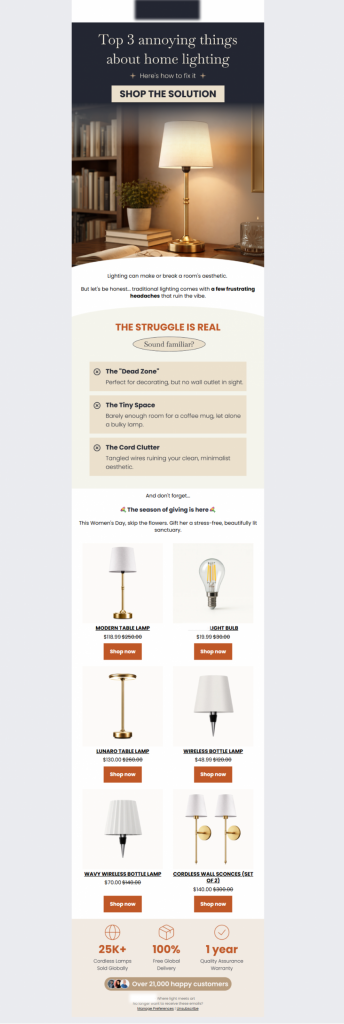
Pre-purchase
-
Welcome flow focused on storytelling and brand positioning
-
Abandoned checkout flow optimized to reduce friction
-
Browse abandonment based on product-view behavior
Post-purchase
-
Product usage and placement guidance
-
Inspirational content about lighting and home decor
-
Cross-sell suggestions based on purchased products
-
Suggestions for combining table lamps with ceiling lights
-
Decor ideas based on similar tones
-
Products that help “complete the space”
4.2. Behavioral Personalization
-
Product browsing behavior
-
Purchase history
-
Email engagement
-
Content about cozy living spaces
-
Product suggestions in the same style
-
Increase content relevance
-
Reduce the feeling of being advertised to
-
Improve conversion rates
4.3. Campaign Strategy Restructuring
a) Inspiration content
-
Decor ideas
-
Lighting applications in living spaces
b) Storytelling content
-
Brand stories
-
Product value
c) Promotion content
-
Controlled discount frequency
-
Maintaining premium brand image
5. Results
Revenue
-
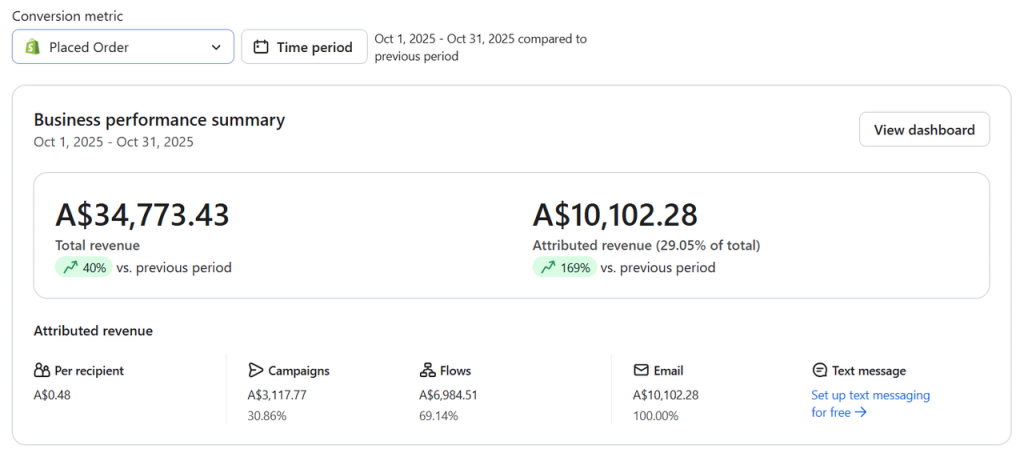
Email revenue increased by 169%
-
Email contributed 29% of total revenue
System performance
-
Flow automation: 69.14% of revenue
-
Campaign: 30.86%
Growth speed
-
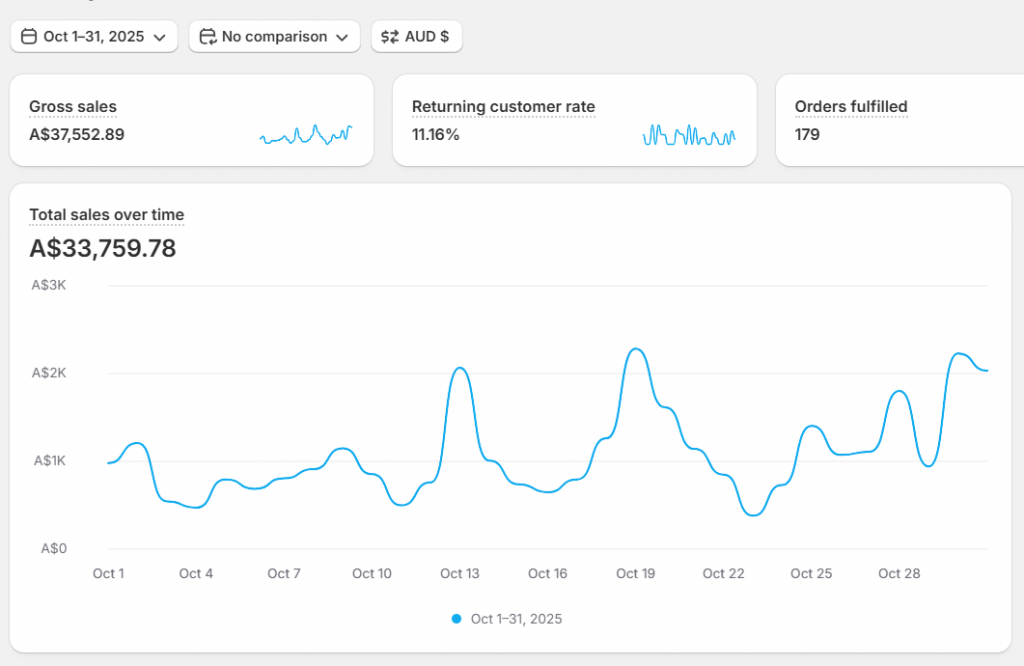
Revenue increased by 40% within the first month
Customer behavior
-
Repeat purchase rate increased significantly to 11.16%
-
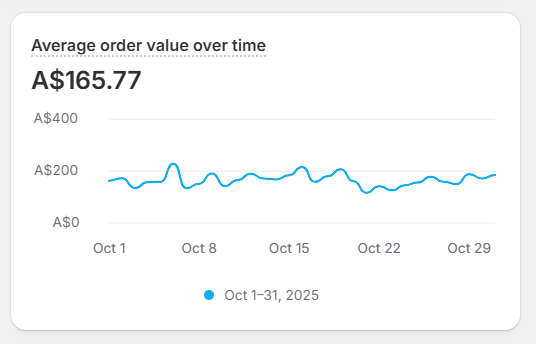
Average Order Value (AOV) reached 165.77, improved through cross-sell strategies
6. Conclusion
-
Building a structured lifecycle system
-
Personalizing content
-
Nurturing customers after purchase
-
Increase repeat purchase rate
-
Increase average order value
-
Generate stable and sustainable revenue